Lava Batteries
How looks deceive
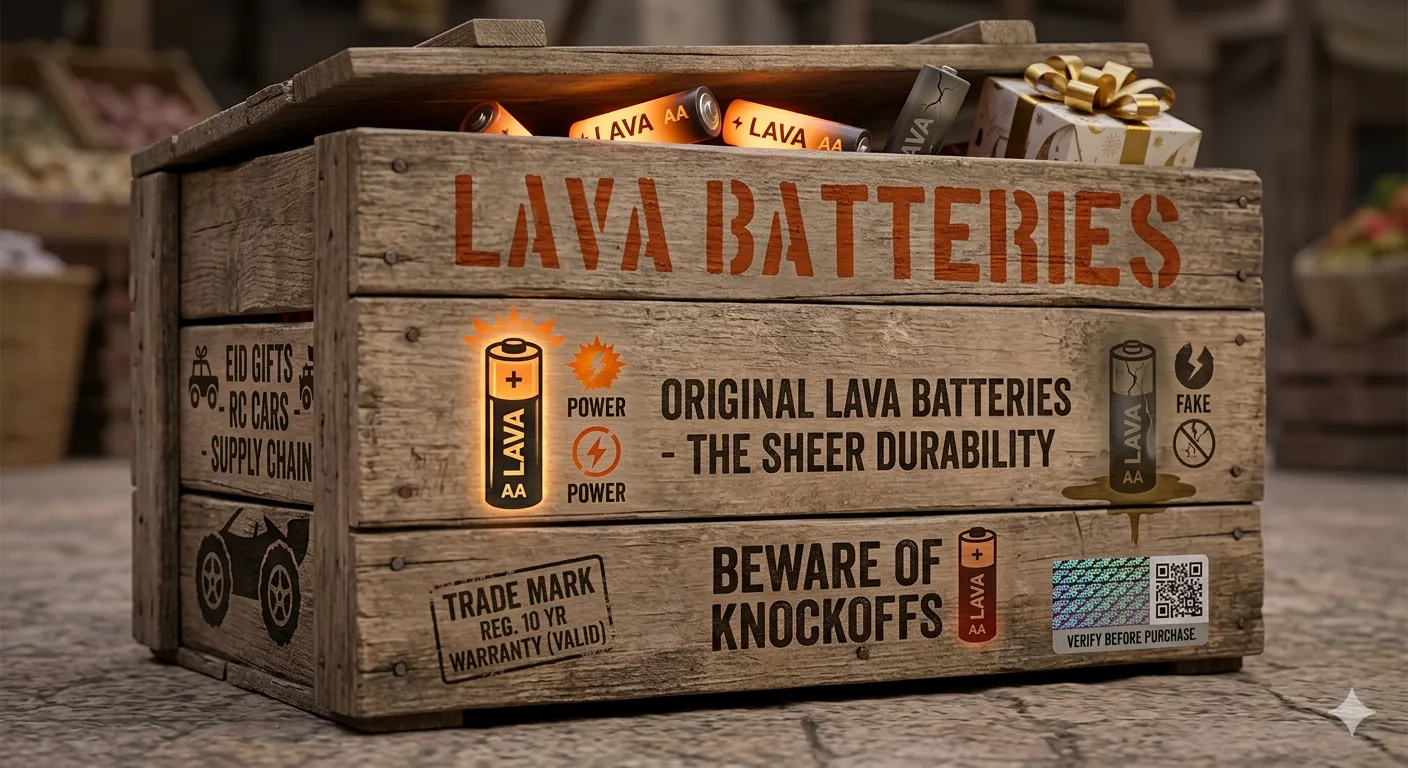
Three days were left for Eid celebrations, and I still didn’t have my Eid clothes. But that didn’t faze me an inch; as a ten-year-old boy, I was far more attracted to moving toys than fabric. Specifically, I had my eye on this RC car on display while I was out in the market with my mother.
“I saw some good clothes today. When do you think we should buy him some for Eid?” my mother asked, even though the question was directed at my father.
I immediately cut in. “I don’t want clothes this Eid! I would rather you buy me that RC car!” I yelled from my corner.
And my father, being the gentle soul he is, just smiled and said, “Don’t worry, son, you will get both.”
Fast forward a week: I had my RC car, and it needed four AA batteries. No worries, I thought. I will just get Lava batteries.
After using those batteries for about a week, the car died down. I bought another set, and this set died in five days. Over time, the lifespan just kept getting worse and worse.
At the time, I just thought I was having bad luck, or maybe my RC car was broken. It wasn’t until I was much older that I realized my dying toy was actually a victim of a much larger, insidious economic problem that was quietly taking over our local markets.
You see, Lava batteries used to be the absolute buzz if you wanted to operate anything that required AA batteries. The allure about them was their sheer durability, among other factors. For most customers, you set them up and just forgot about them—that’s how long it took to drain them.
But it wasn’t all glory forever. After some time, the durability that we knew and loved started to fade away, bit by bit. The problem seemed to be that there were knockoff Lava batteries floating around in the market, and many people hadn’t figured it out yet.
The thing that most exacerbated this crisis was the very low literacy rate in the area where I lived. When people cannot read labels, the only way they can differentiate between products is by their shape, size, or color. The knockoff companies knew this perfectly well. They didn’t need to build a good battery; they just needed to build one that looked exactly like a Lava battery.
But this deception wasn’t just driven by the manufacturers; it was enabled by local shopkeepers. For a retailer, the math is simple: a knockoff battery costs less to buy wholesale, creating an opportunity to offer a “deal” while maintaining a healthy margin.
As these cheaper batteries began to dominate the market, the original product struggled to compete. Higher production costs made it difficult to match the prices of knockoffs, which required little investment in quality. Over time, this created a cycle where inferior products crowded out better ones—leaving consumers with goods that looked identical but performed far worse.
Looking back at it now, this isn’t just an inevitable tragedy; it is a systemic problem that requires a multi-layered solution. How do we fix a broken market like this?
In the short term, the focus must shift entirely to enforcement. Thankfully, with recent upgrades to our intellectual property framework and the establishment of the new IP Tribunal, the robust laws we need finally exist. But it’s not enough for these legal frameworks to just sit on paper. Original manufacturers must aggressively utilize these new, faster legal avenues to penalize the factories producing fakes, turning these fresh laws into actionable, on-the-ground realities. To bridge the gap between the law and the street, manufacturers could introduce an ‘authenticity bounty’—effectively a bug bounty program for the physical market. By offering rewards to customers who blow the whistle on retailers selling fakes, the brand turns every disappointed child and every cheated parent into an active enforcer. This transforms the consumer from a silent victim of deception into a motivated participant in cleaning up the market, making it impossible for knockoffs to hide in plain sight.
However, because we are dealing with a low-literacy environment, legal paperwork isn’t enough to help the average buyer on the street. We also need immediate visual interventions—like complex holographic stickers, textured seals, or QR-coded packaging. While implementing these security features undeniably adds to the manufacturing costs for the original company, it is a necessary investment for survival. These physical markers are things that a ten-year-old boy or a mother who cannot read can still easily identify to verify they are buying the real deal.
Furthermore, we need to create a cultural shift within the local economy itself. The local retailer is often the gatekeeper of the community. We need to foster a reputation economy where it becomes a strict social taboo for a retailer to sell knockoff products. If a shopkeeper loses the trust and respect of their neighborhood for selling fakes, the social cost will finally outweigh the financial profit.
But ultimately, in the long run, the only true silver bullet is education. We must ensure that society can read and write. Literacy is the ultimate form of consumer protection. When people can read the fine print, check the manufacturer’s details, and understand what they are buying, the deception falls apart. Only then can we ensure that the good products survive, and that ten-year-old kids can actually enjoy their Eid toys.