The Shopkeepers Paradox
When the aether decides for you
For the first time in his life, Ahmed was independent. He had a decent job, his own small apartment, and a growing familiarity with the streets of his new neighbourhood. Every day, he noticed things he had once passed without thought: the way people greeted each other, which shops stayed open late, which corners smelled of coffee or spice.
Lately, he had also been learning how to cook, complete with grocery lists and bookmarked recipe websites. To mark his independence, he decided to make firfir, a recipe his grandmother had insisted he learn. Halfway through chopping onions, he realised his mistake, he had forgotten Berberre.
He remembered the small local shop he had kept glancing at while moving in. It seemed like a good excuse to finally check it out.
“Hello, what can I get you?” said the shopkeeper.
She was in her forties, sharp-eyed and efficient in a way that suggested she had been running this place long before Ahmed ever thought about independence.
Before he could answer, a voice cut in.
“Hey, Jamila, could you give me two loose cigarettes, please?”
Ahmed was cut off by a man who looked older than his clothes and poorer than his confidence.
“You didn’t even pay me last time,” Jamila snapped. “Go read a book or something. Maybe then you could pay me back what you already owe me, boy.”
The man left muttering, offended less by the refusal than by the familiarity of it.
When Ahmed turned back, he found Jamila with an expression demanding an answer.
“I was looking for Berberre, if you please,” Ahmed managed.
Her expression softened, just slightly. She turned toward the spice shelf, then stopped. Empty space. She had forgotten to stock on Berberre.
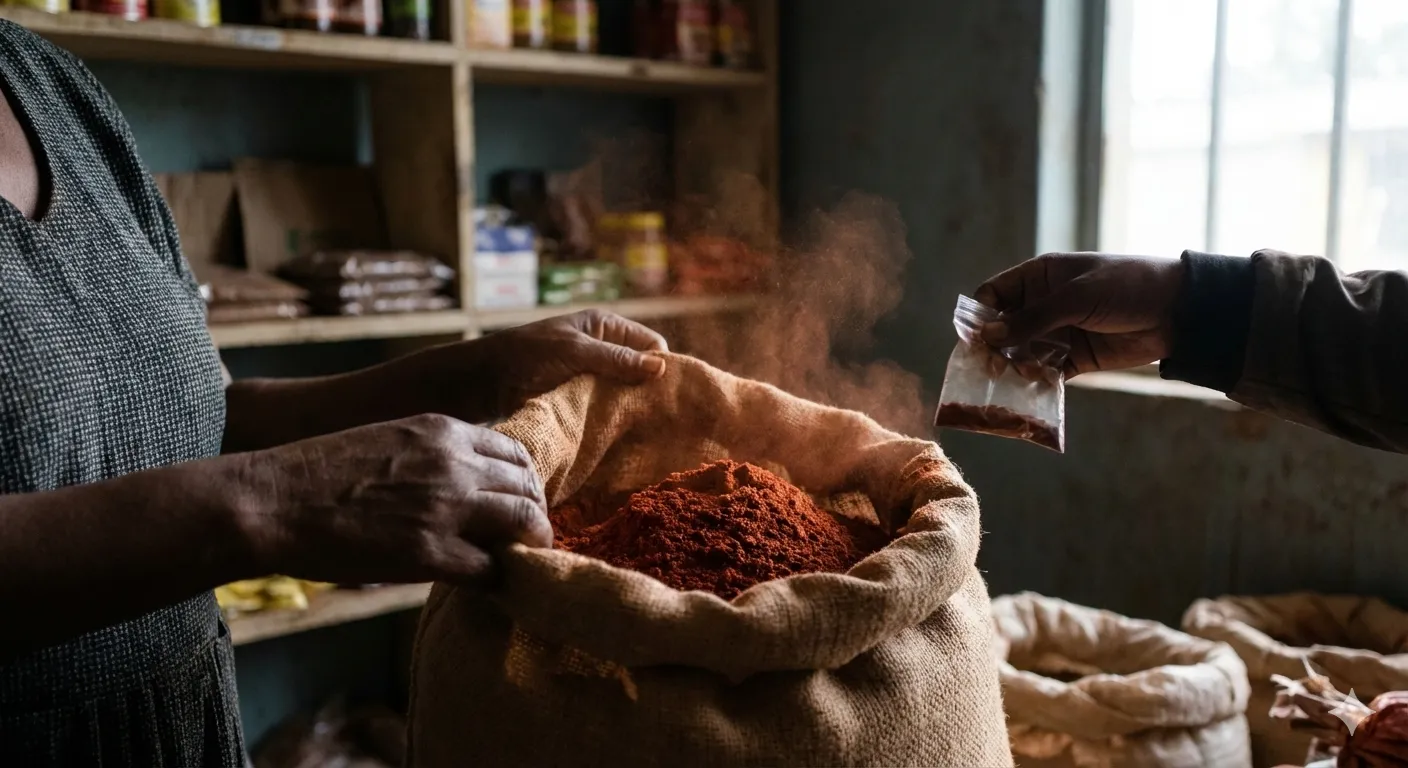
She disappeared behind the counter and returned with a large sack, the kind with no labels and no instructions. The moment she opened it, a warm, sharp, demanding smell filled the room.
“How much do you need?” she asked.
Ahmed hesitated. “I don’t know,” he admitted. “Enough for two meals of firfir.”
She reached for a scoop, then paused. “How much are you willing to pay?”
That surprised him more than her deliberate avoidance of the scale.
He named a number, unsure whether it was generous or foolish.
Without comment, Jamila adjusted the scoop, less than a bag, more than a pinch, then folded the spice into a small piece of plastic and handed it to him.
On his walk home, Ahmed thought about what had just happened. He examined the contents of the bag. It looked like enough. Maybe.
He remembered the other shops he had passed and wondered if they would have given him more, or asked for less.
By the time he reached his kitchen, nothing had been resolved. Jamila had sold what she thought would keep a customer. Ahmed had bought what he hoped was fair.
Between them sat the same uncertainty, measured not in grams or coins, but in the possibility of return.
And that, Ahmed realised, was the price neither of them could see.